| Dayton's
Bluff District
Forum December
2007
Volume 20, No. 9 |
|||||||||||||||||||||||||||
|
A Dayton's
Bluff Christmas Story
A Christmas Story Returns to the Mounds Theatre this December A Christmas Story returns to the Mounds Theatre for the fourth year, live on stage this December for nine performances Humorist Jean Shepherd’s memoir of growing up in the Midwest in the 1940s follows 9-year-old Ralphie Parker in his quest to get a genuine Red Ryder BB gun under the tree for Christmas. Ralphie pleads his case before his mother, his teacher and even Santa Claus himself, at Goldblatt’s Department Store, with the same and always consistent response: “You’ll shoot your eye out.” All the elements from the beloved motion picture are here, including the family’s temperamental exploding furnace; Scut Farkas, the school bully; the boys’ experiment with a wet tongue on a cold flagpole; the Little Orphan Annie decoder pin; Ralphie’s father winning a lamp shaped like a woman’s leg in a net stocking as a major award; Ralphie’s fantasy scenarios and more. Create or continue a holiday tradition at the Mounds Theatre. A Christmas Story is appropriate for all ages. Tickets to the play make a great gift for those “hard to buy for” individuals on your shopping list. Purchase your tickets now. Don’t delay and be disappointed. Performances: Fridays, Dec. 7, 14 & 21 and Saturdays, Dec. 8, 15 & 22 at 7:30 p.m. Sundays, Dec. 9, 16 & 23 at 2:00 p.m. Tickets: Ticket prices are $15 Adults; $10 Student/Senior (55+); and $5 Children (12 and under). Advance purchase group discounts are available. Visit www.moundstheatre.org for an order form or call 651-772-2253 and leave your name and number. Someone will call you back to take your order. The Mounds Theatre is located at 1029 Hudson Road, St. Paul, MN 55106 one half block west of Earl St. Dayton's Bluff Night at the Mounds Theatre Join other Dayton’s Bluff residents on Friday December 14th at the Mounds Theatre at 1029 Hudson Road to see the play A Christmas Story at 7:30 p.m. This is the second year Dayton’s Bluff residents are encouraged to join other neighbors and see this 1940’s era play about Ralphie and his quest for a genuine Red Ryder BB gun for Christmas. This is a great way to have fun and support your local theater, plus you don’t have to fight traffic or waste gas driving across town. If you wish to participate in the neighborhood potluck before the play or need more information about the evening, call 651-772-2075 or email Karin@DaytonsBluff.org. For tickets visit www.moundstheatre.org or call 651-772-2253. Two Sculptures Dedicated at Indian Mounds Park
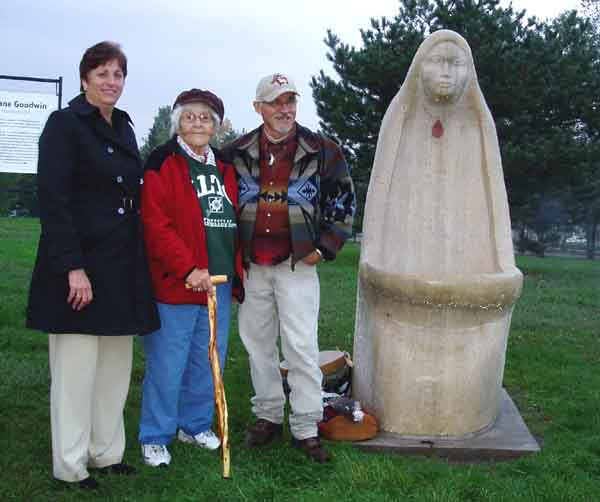
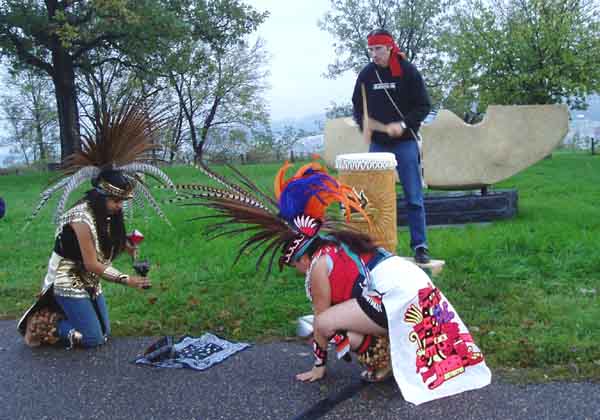
By Nick Duncan Damp and dreary fall weather was not enough to dissuade dozens of people from gathering in Mounds Park for the dedication of Dayton’s Bluff’s two newest works of public art. On October 16th two new sculptures were officially dedicated in Mounds Park. The sculptures, Usumacinta Meets the Mississippi by Mexican artist Javier Del Cueto and Sacred Bowl by Bemidji, Minnesota artist Duane Goodwin are part of the Minnesota Rocks! International Stone Carving Symposium. MN Rocks! was a Public Art Saint Paul program which brought in prominent sculptors from around the world to spend six weeks in St Paul educating the public on sculpture as an art form and in the process creating works of art to be placed in public spaces in the city. The dedication of Duane Goodwin’s Sacred Bowl sculpture included a number of rituals highlighting the artist’s Ojibwa heritage. John Romer played Native American flute, while Goodwin and Pau Day burned sage and held a traditional pipe ceremony. The highlight of the dedication was Goodwin’s words to the crowd. The soft-spoken artist talked about how honored he was to have his sculpture stand in such close proximity to the ancient Native American burial mounds of Mounds Park. “Mound, sunset, city,” said Goodwin, gesturing toward the mounds, the bluff and the city beyond, with a smile. Goodwin wants people to see Sacred Bowl as representative of both the strength and the giving of the Native American people. He hopes the work will be a catalyst to draw more Native people to Mounds Park and, in turn, make them aware of the area’s rich Native American history. Finally, in a very touching gesture, Goodwin dedicated Sacred Bowl to his 87 year-old mother. While Romer played a haunting version of Amazing Grace on the flute, Goodwin and Day lit an Ojibwa offering pipe. Following the Sacred Bowl ceremony the crowd boarded the St. Paul Trolley and rode down the hill to the site of Javier Del Cueto’s sculpture Usumacinta Meets the Mississippi. Cueto, a Mexican artist, was not able to attend the dedication but the Mexican and Aztec culture were well represented by the Aztec Mecia Cuctemec dancers. The dancers, despite the chilly weather and a steady drizzling, did a number of impressive synchronized Aztec dances in traditional costumes and bare feet. According to the artist, Usumacinta Meets the Mississippi is meant to represent the ties between the waters of Mexico City and the waters of the Mississippi River. Indeed, the sculpture’s location on the bluffs overlooking the Mississippi River is ideal to that purpose. Anyone who wants to see our neighborhood’s newest public art works for themselves can find Sacred Bowl near the corner of Mounds Blvd. and Earl. Usumacinta Meets the Mississippi is located along Mounds Park Boulvard across from the intersection with McLean. Visit www.minnesotarocks.org for more info on these or other sculptures in the Minnesota Rocks! project. Dayton's Bluff Block Nurse Program
The new Dayton’s Bluff Block Nurse Program has opened its doors in the educational building at First Lutheran Church, 463 Maria. They are very happy with their new office space where they also hold feet clinics and blood pressure reading events. Clients and volunteers are needed. If you are a senior citizen and need services or more information about the Dayton’s Bluff Block Nurse Program please call. Volunteers are needed to help seniors with their needs such as rides to the grocery store or the doctor, snow shoveling and other chores, friendly visits or calls, respite caregivers, special projects, administrative help, and governance. Their office is open on Mondays from 9:00 a.m. to noon in the educational building at First Lutheran Church, 463 Maria. The phone number is 651-776-7210 extension 303. Change the World! Vote Early - Vote Often! Three East Saint Paul projects, two in Dayton’s Bluff, are competing for help with projects in nine other cities through HGTV’s new program Change the World. Start at Home. The voting public across the country will decide the winner. The Dayton’s Bluff projects are the Bruce Vento Nature Sanctuary and the home of Kris and Tom Nelson on North St., which was featured in the September 2006 Forum. The other project is the Wilder Recreation Center and City Academy in the Payne-Phalen neighborhood. Voting is open from November 9 to December 21. PLEASE VOTE for Saint Paul’s projects. You are allowed to vote once per day. The winner will be announced January 1, 2008 and work on the projects will begin in April 2008. Log onto: http://www.hgtv.com/changetheworld and VOTE TWIN CITIES NOW! Then log in again tomorrow and vote again. Then do the same thing the next day, and the next day and well, you get the picture. If you’ve ever wanted to stuff a ballot box, this is your chance to do it legally and for a very good cause. Springboard for Neighborhood Sustainability By Ed Lambert, Executive Director, Dayton’s Bluff District CouncilThe Alliance for Sustainability, based in Minneapolis, has held 2 major conferences on neighborhood sustainability this decade. Each has attracted some 500 persons (mostly from Minneapolis) and provided excellent contacts, resources, and other information of interest to those who want to develop or retain liveable neighborhoods. The conferences are free, open to any Twin Cities resident, and the next one takes place Saturday 3/8/08 at Augsburg College in Minneapolis from 8:30 a.m. to 4:30 p.m. This advance notice is in this 2007 District Forum issue for three reasons: 1. The District Forum comes out 10 months of the year beginning in March, so a more timely notice would not be sufficiently in advance to help Dayton’s Bluff residents and business people to plan on attending. 2. The District Council hopes that a substantial number of residents and business owners will want to attend, thus forming learning groups, which can bring back some information and helpful strategies for our community’s development. 3. This conference is particularly rich in workshops, provision of tools, and help with forming action teams to carry productive action forward. Some highlights of this conference are: 1. Participants will receive project tool kits to carry out energy conservation, walking and biking, tree planting, rain garden and other projects with their block club, business, school, or congregation. 2. A major planned outcome is the formation of some 100-200 teams of urban and suburban volunteers to use the tool kits and make things happen. 3. Sponsors include Minnesota League of Cities, City of Saint Paul, Friends of the Mississippi, U of M Extension Service, and Eureka Recycling among some 15 others. Community Greening, Green Buildings, Gardens, Food, and watershed protection are also among the topics the conference will focus on. For more information, please visit www.afs.nonprofitoffice.com or call 612-331-1099x1 (Sean Gosiewski). You can register on their site and get lots of other information of interest. Hopefully Dayton’s Bluff will have a substantial group there, which will bring back lots of Green Energy to help “Build the Bluff.” Take a Snow-Free Hike in Dayton's Bluff By Garry Fay, Walk the Bluff Coordinator Crimson and gold light danced off the Wakan Tipi pond as its warmth filtered through the sun-drenched leaves. A gaggle of painters were clustered under umbrellas as their instructor prompted them on how best to capture the moment’s glory. Birds of all sorts were taken to wing and song as the day’s heat greeted us on the first Saturday of November as “Dayton’s Bluff Take a Hike” nears two decades of continuous monthly hikes through several of Saint Paul’s natural gems. Every time I head down off the Bluff into the Vento Park I get rejuvenated as the wonder of discovery reaches out to me. Swede Hollow has a more human feel. Often there are people about bird watching, searching for wildflowers or simply enjoying being themselves in a splendid park. We are blessed to live in an area with such beauty and dedicated civic-minded people who made these public spaces possible. The people I meet inspire me to want to get out and do more. Regardless of the hour, never have I felt uncomfortable or threatened by others. On the contrary, walkers there seem to exude a friendly atmosphere. I wish I knew what to say that would motivate more people to make the effort to enjoy their lives more by getting outside frequently. Do something good for yourself… vow to get out to walk more often. Do it for your dogs, do it for your health, and do it for your community. Just do. It is one of the ultimate ways in which we can BE happy – by being active in nature. Now as daylight is fading from the world with winter’s encroachment you can note the low light’s presence outdoors when you are out there much more so than you can from your car or home. Get out there and get going! You’ll find that cabin fever abated and your sense of well-being increased. Though the weather is a bit nippy with the brisk breeze and frequent flurries you may find that the gloom and doom from inside is washed away in the low light of the day. Look for a comet in the northeast evening sky or some other celestial promise. Promise yourself to enliven your days with more time outdoors. Look for a project. Be an anti-litter bug and fill a shopping bag with the detritus of those who have gone before and left their mark on the landscape. Volunteer your family and friends to beautify the neighborhood or volunteer to clean up or help a neighbor in need. If you don’t know of anyone in need then take a walk about your block and sure enough you’ll find a place that needs a bit of attention. Offer to help. Step up to the plate and swing for the fences. Go with a friend or a block club member. If you don’t belong to a block club yet then please email Garry@DaytonsBluff.org or call 772-2075 and ask for Garry. This winter take your shovel out and make snow removal your mantra. Clean your lot and then look to help out others. Leave them a note if you don’t see them when your job is done. Let us know if there are people who need help with this civic responsibility. Let us know if you want to help. Complaints may be called into the city at 651-266-8989 or send them an email through the Dayton’s Bluff website. Go to Links, City of St. Paul, Departments… DSI code enforcement will put out a work order on the property once they confirm that there is a snow/ice accumulation. They charge the property owner $140/hour to shovel, sand and ice public walks. This process with the city takes many days. Be Your Own Boss - Register Early for Next Small Business Class The next Community Meeting is Thursday, December 6
from 6:30 to 8:00 p.m. in the meeting room at the Dayton’s Bluff
Community Council, 798 East 7th Street at the corner of 7th and
Margaret. Meet With the
Police - Eastern
District Meeting On Friday, December 21 the Eastern District
Police will host their monthly meeting for community members. The
meeting is intended as a time to listen to and address people’s
concerns about crime and other issues on the East Side.
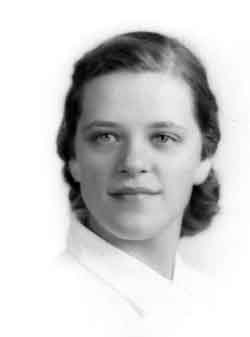
Should Dayton’s Bluff Have a Hall of Fame? And Who Might Be In It? By Steve TrimbleWe all know about the sports halls of fame which occasionally become controversial when selection time comes around. Minnesota has its own Hockey Hall of Fame on the Iron Range to celebrate famous professional pucksters and hopefully to convince tourists to visit Eveleth. Our state is filled with various lists of people who local folks feel should be remembered for their accomplishments. The Minnesota Historical Society recently developed an exhibit that picked 150 people, places and things that shaped the northland. On the local level, Harding and Johnson, East Side high schools have halls of fame complete with photos and biographies on the wall. So why not a Dayton’s Bluff Hall of Fame? Sounds easy at first glance, but there are some things to consider. On what basis should people be included? We certainly have some important people who once lived here—or maybe still do. But should they be voted in if they left when they were young and became famous somewhere else? Then there is the question of how people define “important.” Does this word really mean having money and power and influence? What about someone who taught piano lessons for forty years and influenced hundreds of children but never achieved any recognition outside of the neighborhood? Modern historians have often remarked that women may be overlooked because they were mostly kept out of the “male professions” that were thought to be the most “important.” Attention is given to those few “women worthies” who were able to succeed in spheres dominated by men. Perhaps, as the argument goes, attention should be given to accomplishments made within the “female sphere.” So it is with some hesitation that I am going to write about some Dayton’s Bluffers of note. To get the discussion started—I hope there will be one— here are a few folks who might be picked for what will likely remain a “virtual hall of fame.” I have tried to include a diverse group of people who lived here during many different East Side eras. To provide a shred of neutrality, the names will be offered up in alphabetical order. The Forum is hoping that readers will send in their own suggestions. A handy submission form is being provided next to this article. Please write! James R. Anderson James R. Anderson, (1933-2000) a 1948 St. Paul Mechanics Arts High School Graduate, a Marine Corps Corporal who served in the Korean Theater in 1951 and who was awarded the Silver Star and the Purple Heart, resided at 697 Surrey prior to his death. Obviously more research is needed to provide more about why he received the prestigious Silver Star and what he did in his later years. Richard Arlen Born Cornelius Richard Van Mattimore, actor Richard Arlen (1898-1976) was raised in Dayton’s Bluff. During World War I, before the U. S. became involved, he joined the Royal Canadian Air Force and served as a pilot. He later went to California and by pure luck was given an opportunity to act. Arlen’s big break came when he was cast as a pilot in the 1927 silent film “Wings” which won the Oscar for Best Picture. Usually playing tough, cynical heroes he moved easily into sound, but by 1935 he was working in B movies. Would there be any interest in having a Richard Arlen film festival at the Mounds Theatre? Clara Bergmeier Clara and Frederick Bergmeier lived for many years at 614 North Fountain Place, in a home whose large landscaped yard ran down into Swede Hollow. Clara, born in Minnesota to German-immigrant parents, worked with her husband Frederick to publish the local German newspaper, the Volkszeitung. After he died in 1908 she continued running the paper until 1923. She was always very active in the local German-American community as well as church and women’s organizations. Harry Blackmun Harry Blackmun (1908-1999), the son of a Dayton’s Bluff businessman lived at 847 East Fourth Street. He attended Van Buren Elementary School (today’s Dayton’s Bluff Elementary) and after graduating from Mechanic Arts High school, he went on a scholarship to Harvard University and then graduated from law school. Blackmun was appointed to the Supreme Court in 1970 where he remained until 1994. While he had been a good friend with Warren Burger since they attended grade school together, toward the end of their careers they voted together on less than half of the decisions and their friendship had cooled. Blackmun is probably most remembered for his written opinion on Roe v. Wade in 1973 but was also very concerned with First Amendment rights of free press, Sixth Amendment rights of fair trial and the need to end capital punishment. William Branch In 1861 William Branch built a house at the northeast corner of today’s Bates and Wilson (between Hudson and Plum). According to one biographer, he “was a medium-sized man, cool and collected, and possessed of considerable ability.” Branch was an artisan who ended up being a contractor for large jobs such as grading the first forty miles of the Superior and Mississippi Railroad. He was also interested in politics, participating in the territorial legislature and serving as a city alderman from 1856 until 1861, while also holding a seat on the county commission in 1858-59. Branch was also a member of the House of Representatives during the 1860’s. His 1873 obituary said he “did not have the advantages of much education when young,” but was “endowed by nature with a great deal of shrewdness, hard common sense, practical judgment and business sense.” Cyrus Brooks Rev. Cyrus Brooks (1811-1902) resided on Mound Street from 1875 to 1892. The information easily available says he was an energetic and renowned Methodist minister. So far, specifics about his career and writings have been hard to find, but perhaps some reader is a distant relative. Warren Burger Warren Burger (1907-1995), was one of seven children born in St. Paul to a family of Swiss and German descendants. He lived at 695 Conway from 1914 to 1933. He attended Van Buren Elementary School and Johnson High School and earned letters in hockey, football, track and swimming. Having to work, Burger received an undergraduate degree at night from the University of Minnesota, and later earned a law degree at St. Paul College of Law, today’s William Mitchell. In 1969, President Richard Nixon selected him as United States Supreme Court Chief Justice, a position he held until he resigned in 1987. He was considered a very competent administrator who made the Court’s work more efficient and was also a tireless promoter of judicial reform. Rick Cardenas Rick Cardenas and his family grew up in a home under the Third Street Bridge and later moved up into Dayton’s Bluff as the earlier housing area was torn down. In addition to being a good student, he became a star hockey player at Harding High School. He was seriously injured in an automobile accident and was partially paralyzed and confined to a wheel chair. As an adult he became founder and director of a grass roots organization that would be run by people with developmental and other disabilities. The group he created was Advocating Change Together (ACT) which helps its members see themselves as part of a larger disability rights movement and make connections to other civil and human rights struggles. While he now lives in a downtown high rise, he often looks out the window and sees the neighborhood in which he grew up. Marion Carpenter Marion Carpenter studied photography in St. Paul and became one of the first women to become an official White House photographer. She was the only woman among a handful of photographers who traveled with Truman. She was not as successful in her personal life. She married twice, and by the time she was in her mid-thirties, her marriages and career were over. Carpenter returned to St. Paul and worked as a wedding photographer and as a private nurse to support herself, her mother and her child. According to the newspapers, she died at the age of 82 in her Dayton’s Bluff home in October 2002 “on her couch, bundled up tightly against the chill because the thermostat had been lowered to save money.” John H. Colwell John Colwell of 257 Johnson Parkway was raised in Sherburne County, got a job on the railroad and moved to the Twin Cities at age eighteen. He became a fireman and eventually advanced to engineer. In 1911 he was appointed state boiler inspector. Colwell was a prominent member of the Fraternal Order of Eagles and active in the Dayton’s Bluff Commercial Club. He was also the first president of the Mounds Park Improvement Association. It was the group that, in 1913, conducted a successful, year-long quest to re-discover and uncover Carver’s Cave. According to one historian “Colwell was born and reared in the Democratic Party, but his fine broad mindedness, a mark characteristic, has made him independent, and he endeavors to support the man and the measure most likely to prove the friend of the people.” Harold Dahlquist While Harold Dahlquist may not be found in any history books, he is well known as the founder of one of the community’s most successful ventures. In the mid-1950’s, as concerns over juvenile delinquency were abounding, he led a group of people who decided to start a local baseball program. Parkway Little League was formed and held its first game on June 6, 1955. Dahlquist donated money and work and located land for the group’s home on Third Street just east of Earl. In June, 1956 the new fields, which are still being used today, were opened. Lyman Dayton Naturally Lyman Dayton-and perhaps his wife Maria Bates Dayton-would be among the chosen few. Since a great deal has been written about both of them in past issues, no need to repeat the facts again. Edward James Devitt Edward Devitt (1911-1992) came from Irish working class stock. He was born in St. Paul and was another major judicial figure to attend Van Buren Elementary School. He went to St. John’s University and then earned a Bachelor of Law degree at the University of North Dakota in 1935. Devitt was elected to the U. S. House of Representatives as a Republican from St. Paul in 1946, but was defeated for re-election by Eugene McCarthy. He was later appointed a federal judge on the U. S. District Court for Minnesota in 1954 and retired in 1981. Judge Devitt was the co-author of Federal Jury Practice and Instructions and chaired the American Bar Association Legal Advisory Committee on Fair Trial-Free Press. His most notable cases were the 1961 racketeering trial of Minneapolis gangster Isadore “Kid Cann” Blumenfeld, and the Reserve Mining environmental pollution trial of the mid 1970’s. Dr. George Earl George Earl was a physician who, along with his brother, founded the Mounds Park Sanatorium in 1906. Born in Iowa, he built a house at 935 Hudson Road in 1913. One of the rooms on the first floor was the examination room and waiting area. Earl was also involved in the Mounds Park Bank, and the Midway Hospital, as well as Gillette Children’s Hospital. Marie Dreis Giesen Marie Dreis Giesen lived with her husband, Peter J. Giesen in a brick Queen Anne house at 827 Mound Street from 1892 to 1908. She was born in Germany and came to the United States in 1850 and to Minnesota four years later. Marie was a costume and dress designer with a shop at 37 W 3rd St (now Kellogg Ave). Both Marie and her son Martin were involved in the Giesen Costume Company. Her interest in German language theater was behind the formation of Giesen’s Costumes which became the largest of its kind in the Midwest. She ran it from 1872 until 1901 and it was subsequently operated by her son and his wife. The St. Paul Municipal Opera relied heavily upon the Giesen’s to outfit their various operas. It remained in operation until the 1960’s. Father Gleeson Thomas F. Gleeson came from Northfield in the 1890’s to be the third head of St. John’s Catholic Church at Fifth and Forest. It was a post he was to hold for thirty-five years. Father Gleeson found in his new charge a church, a rectory and a new school, but along with these, a heavy indebtedness. But under his leadership the heroic little parish of some 300 families held its own during a series of trying years. As the congregation, grew, there was a new church and a new parish house. Father Gleeson lived for only two years in his new home, however, and died after a short illness on March 3, 1929. William Hamm William Hamm, the son of brewery founder Theodore Hamm, was active in the business world as well as participating in community affairs. He was very active in local Democratic politics. William Hamm served on the City Park Board and the Common Council, as the City Council was then named. In 1892 he built a large frame house at 668 Cable Street for his new bride, Marie Scheffer in the same year that Hamm’s Brewery underwent a dramatic expansion. Hamm was a mainstay of the Dayton’s Bluff Commercial Club, helped organize the first St. Paul Winter Carnival in 1886 and was the Carnival’s first Borealis Rex. Laura Hand Laura Hand’s career at Van Buren School spanned two centuries. From 1893 to 1917, she was the school’s principal. Miss Hand was especially interested in art and brought back many beautiful prints from European trips. She bought the school’s first Victrola and electric lantern (an early version of a slide projector) with a collection of a thousand slides. Miss Hand introduced home economics and manual training classes at the school. Raised in an earlier era, she tried her best to provide quality education and to continue an older set of social values into a new century. The Hand Memorial library was started in her memory at Van Buren School on May 24, 1928. Alfred J. Hill Alfred Hill (1833-1895) the archaeologist and philanthropist, was born in London and was trained as a civil engineer. He emigrated to the United States in 1854, moved to St. Paul, lived at 406 Maria (now part of the Metropolitan State University parking lot) and spent much of his career in the State Land Office. After a stint in the Civil War, Hill joined the Minnesota Historical Society and served as a member of the Committee on Archaeology and subsequently as treasurer. Because of his interest in history, Hill entered into a formal contract with professor T. H. Lewis to begin the Northwestern Archaeological Survey. From 1883 to 1895 the survey, which was conducted out of Hill’s house, catalogued more than 12,000 Indian burial mounds in Minnesota, surrounding states and parts of Canada. Hill died suddenly of typhoid pneumonia, bringing an abrupt end to the Northwestern Archaeological Survey. Orvin Hull Orvin Hull, who lived at 913 Fremont, never had a college degree but came to value education as he observed people around him as a long-time maintenance employee at 3M. He began gathering the company’s stock in its early years and during the Depression and when he died in 1961 left an endowment of a million dollars for a scholarship fund for East Side youth. The money was to go to graduates of Johnson and Harding High schools-where his own children had gone-for tuition and fees at state-run schools. Over the last four decades over a hundred young people were aided in their quest for higher education. Herbert Keller Herbert Keller was the son of the Dayton’s Bluff pioneer who built a stately home on Eichenwald Street. A strong Republican, he became mayor of St. Paul and later a Ramsey County Commissioner. One of his avid interests was developing the area’s park system which helps explains why they named Keller Lake and Keller Golf Course after him. Oscar E. Keller Oscar Keller. (1878-1927) came to St. Paul in 1900 from Wisconsin, starting out as a clerk for a downtown company. He later opened a grocery store at 863 East 7th while living at 308 Bates Avenue. A strong supporter of unions and progressive in his ideology, Keller was a member of the city council of St. Paul from 1910 to 1914, was a St. Paul city commissioner from 1914 to 1919, and the commissioner of St. Paul public utilities from 1914 until July 1, 1919 and always fought for lower gas and electric rates. He had a reputation as a fighting public official and openly attacked the city railway system He was an Independent Republican U.S. Representative from the St. Paul area in 1919, appointed to fill the vacancy caused by the death of Carl C. Van Dyke. He was then reelected as a Republican. He lost in 1926 and died a year later. William King William King came to the U.S. from England and settled in Dayton’s Bluff in 1872 where he purchased five acres of land and built this home in the same year. The house was small, with a kitchen, a parlor and three bedrooms and a bathroom out back. He set up a florist business. The house of this “typical English gentleman,” as his granddaughter described him, still stands at 1150 Pacific. In 1866 King platted the land into lots, but they did not sell well and he still owned most of them when he died thirty-six years later. He opened a retail shop on Seventh Street in Lowertown in 1877. Even after Pacific Street was graded to his house, it took many years for city water to arrive. All of the hundreds of plants had to be watered by hand from a pump. He retired in 1912 at age 68 and died on January 10, 1922. Michael F. Kinkead Kinkead was a First Lieutenant during World War I and lived at 695 East Fourth in 1919. This 6' 2 3/4" veteran, who was born in Limerick, Ireland, was a self-employed lawyer who worked out of the Exchange Bank Building after the completion of military service. He became active in the community and was one of the organizers of the Polish American Club in 1927. Kinkead was most well-known as the Ramsey County Attorney who prosecuted the Green Lantern murder case in 1931, shortly after taking office. He successfully prosecuted the local mob that was involved in a murder outside this notorious gangster hangout. Kinkead left the County Attorney’s office to become a probate judge in 1939. Ed Krahmer Ed Krahmer was born in 1905 on Hope Street and lived all of his life in the neighborhood. As a child he contracted polio and walked with a slightly noticeable limp. As a youngster he gained strength working for a sister on her farm near Highway 61. This experience nurtured a life-long love of gardening. He attended Sibley Elementary. In 1937 he married Helen Albrecht and they both moved into the family home on East Fifth Street that Ed’s father had built in 1907. He worked as a freight salesman for several different railroads. He was very active in community affairs including Peace United Church and Community Council. He spearheaded the successful opposition to the building of Highway 212 through the neighborhood. Walter T. Lemon Walter Lemon, a resident of 755 East Fifth, graduated from the University of Minnesota Law School and served in the Minnesota House of Representatives from 1903 to 1906. He was a very important member of the Dayton’s Bluff Commercial Club and a member of the St. Paul Curling Club. Nathaniel McLean Nathaniel McLean (1787-1871) was an Ohio newspaperman, an elected member of the Ohio Legislature and an officer in the War of 1812. He moved to St. Paul in 1847, and embarked on the newspaper business, publishing the Chronicle & Register at the age of 60. He was an abolitionist and was active in the early Republican Party in Minnesota. McLean then became federal Indian Agent for the Sioux, and in 1855 was elected a Ramsey County commissioner. He lived in a house—now gone— near the corner of what is now Mound and McLean Streets. McLean Township included all of today’s Mounds Park area. He died of cancer in 1872. Adolph Munch Adolph Munch was the president of Die Volkszeitung Printing & Publishing Company and resided at 653 East Fifth Street. Catherine Filippi Piccolo Catherine Piccolo, a long-time resident at 397 Maple Street, grew up on the Iron Range and enlisted in the military in 1942. She quickly advanced to master sergeant by February of 1944. She ended up in charge of the WAC contingent that handled secret documents at Oak Ridge for several years. By the time she left the service in 1950, she was a captain. After leaving the service, Piccolo stayed very active in the St. Paul area. She worked for several companies including two stints with 3M, interrupted when she was raising her three children. She became the business manager at Hill-Murray High School for eight years, and was elected to the St. Paul School Board for two terms. She served on the St. Paul Civil Service Commission and the St. Paul Planning Commission. She is buried at Fort Snelling Cemetery. Dr. Frederick Plondke Dr. Plondke, who lived at 705 East Fourth Street, was associated with a downtown institution but felt there was a need for a community-based hospital on the East Side. He approached a group of business people, pastors and members of the Lutheran churches and in 1911, they founded of St. Johns Hospital at Seventh and Mounds Boulevard. Plondke was its Medical Director for over thirty-five years. He introduced the use of spinal anesthesia during operations, using the drug Stovain. Madgdelana Rau Magdelana Rau grew up in a German-American family in South Dakota but left to go to St. Joseph’s School of Nursing in Minneapolis. She graduated in 1908 and was hired to be the Superintendent of St. John’s Hospital in Dayton’s Bluff. It was a job that that ended up lasting forty-two years. They say she was a model of efficiency and a stickler for detail. Did any of you work with her? Send in your experiences. Angelo Rulli Angelo Rulli, who lived for a good many years in Dayton’s Bluff, was a probation officer and member of St. Ambrose Catholic Church. He started collecting music boxes and organs in 1971 and developed a reputation as an expert in the history of this form of music. He often appeared on A Prairie Home Companion in the mid-1980s as an organ grinder. He tired of life as a probation officer, and from 1986 to 1988 he joined a St. Louis-based circus in the summers. Albert Scheffer Albert Scheffer (1844-1905) was born in Prussia and came to Minnesota in 1850. He was a businessman and was involved in banking for many years. He was on the St. Paul school board, in the state legislature, in the Grand Army of the Republic and was a founder of the St. Paul Winter Carnival and served as president of the St. Paul German Insurance Company. He and his family lived on Mound and Maria Streets and a St. Paul school was named in his honor. Ilma Scheffer Growing up at 267 Maria Avenue, Ilma and her sister Martha taught dancing in their home and at the Dayton’s Bluff Commercial Club during the 1920’s. For many years she went on to run one of the better downtown restaurants, appropriately named Café Ilma. William Schornstein William Schornstein was a grocer who started out working for others and eventually opened the Schornstein Grocery and Saloon at 707 Wilson in the late 1880’s. He and his family resided there as well. The establishment was especially popular among the area’s German-Americans and there was a large hall on the third floor that was a place for meetings and special events. John A. Seeger John Seeger was a longtime Dayton’s Bluff resident who lived on the 600 block of East Fifth Street. He was born in Kentucky and moved to St. Paul in 1868. He was a contractor and builder from 1872 to 1905, and specialized in manufacturing refrigerators after 1905. The Seeger Refrigeration Company developed the first electric refrigerators and became the nation’s largest manufacturer of private-brand refrigerators and was a major Dayton’s Bluff employer. The company was eventually merged into Whirpool. Jennie Siebold Jennie Siebold lived with her family at 778 East Sixth Street in a block now filled by Metropolitan State University between 1881 and 1930. She became a nurse and was employed at the Miller Hospital Clinic. She eventually was at the University of Minnesota where, for a time, she was head of the nursing team that went to the World Amateur Softball Tournament. Margaret Sieland Known to all by her nickname “Mike,” Margaret Sieland grew up in Dayton’s Bluff and was always involved in athletics. She began coming to the Margaret Recreation Center to play diamond ball, an early name for softball. She was a top-notch swimmer and came close to going to the Olympics in that sport. She chose recreation as a career and appropriately ended up being the director at Margaret Playground for several decades. This life-long resident of the East Side is currently living at the Cerenity home on Earl and Thorn. In 1985 the Minnesota Sports Federation inducted her into their Hall of Fame. That must make her a shoe-in for our possible list. Taoyateduta Taoyateduta, often referred to in an English translation as Little Crow, was an important Dakota leader. He was born around 1810 in Kaposia, then located along the Mississippi River on the western edge of what would become Dayton’s Bluff. He learned to speak and write English and served as a spokesman for his people. Even after the Dakota left for their reservation along the Minnesota River in 1850’s, he visited St. Paul and his name occasionally appeared in the newspapers. He was the reluctant leader of the 1862 Dakota Conflict. Steve Thayer Steve Thayer grew up in Dayton’s Bluff and graduated from Harding High School. He went to college and became interested in acting and went to California. He eventually decided that writing was his career of choice and returned to St. Paul. His first novel, St. Mudd, set mostly on the East Side, had to be self-published, but a national publisher picked it up. He has since gone on to write several other novels and is considered one of the state’s leading writers. Truman Smith Truman M. Smith who once lived at 908 Mound Street, began his career as a banker and was once among the richer men in the city. He had a love of gardening and his home site was adorned with a variety of flowers. Smith was wiped out in the 1857 financial panic, his house went on the auction block, and his career as a banker was over. To survive, Smith turned his green thumb into a livelihood and was soon a major garden farmer, put out a catalog that listed a wide selection of small fruits and other plants for sale, had a vineyard, raised pears, apples, and nearly forty types of grapes. He was elected president of the Minnesota Grange and of the Minnesota State Horticultural Society, moved to San Diego, California, in 1888, but died in 1909 in St. Paul. Milhailo Temali Mike Temali, as he is usually known, grew up on Mounds Boulevard. Temali, a graduate of Harding High School, has his Master’s degree in Public Affairs from the Humphrey Institute at the University of Minnesota. He is the founder and executive director of the Neighborhood Development Center (NDC) and the founder and president of Western Initiatives for Neighborhood Development (WIND), both in St. Paul, Minnesota. Previously, he was executive director of North End Area Revitalization, Inc. He served on the Governor’s Minority Business Workgroup and has been a Bush Leadership Fellow. Sister M. Theonilla Sister Theonilla was a member of the order of Sacred Heart sisters of Notre Dame. She came to Dayton’s Bluff on November 21, 1882 and started teaching at the new school the next day. At the start, there were eighty-six students. She remained at the school for forty-five years until she left for the mother house in August, 1928. Are there different nuns who should be considered? Perhaps Sister Giovanni who was at Sacred Heart Church before serving on the West Side? Emil Ulrici Emil Ulriici was a well-known architect who once lived at 619 North Street and designed a number of structures in Dayton’s Bluff. He was associated with Millard, Ulrici & Eltzner. There you have it. Some of my suggestions for a Dayton’s Bluff Hall of Fame—if there ever is one. More research needs to be made on most of them. It is obviously incomplete and many names could probably be added or a few subtracted. Hopefully some of you readers may make suggestions. If there are any mistakes or corrections that need to be made, please contact us. Please consider printing out the nomination form below and sending it in or just jot down your ideas on paper or in an e-mail. Please consider helping out. The Forum will do its best to publish what is sent in.
By Mary Ann Cogelow
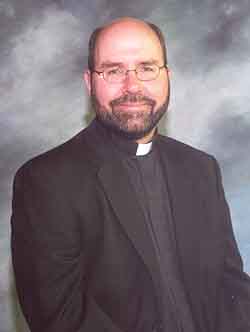
Our Saviour’s Lutheran Church has a new
pastor. Reverend Brian Scoles is no stranger to St. Paul, but is
new to the East Side. Pastor Brian is a native of Iowa, but lived
in St. Paul from 1993 to 2004. From 1993 to 1996 he attended Concordia
College (now University), located in the Hamline-Midway part of
town. From 1996 to 2004 Pastor Brian served as the Minister of
Discipleship and Outreach at Bethel Lutheran Church in the Como
Park-North End area. Rev. Scoles was ordained and installed at
Our Saviour’s on June 24th of this year. Pastor Brian not only
serves an East Side congregation, he lives in the area with his family
as well. He and his wife Alaine have one daughter and a
son. The Dayton’s Bluff Community Council office is looking for a special person to join the staff team to help anchor Council programs, and strengthen overall administration at a time of substantial growth and change in Council operations and community expectations. Engaged in a substantial and exciting initiative called Invest Saint Paul, the Council needs an Admin Assistant capable of taking on important responsibilities; while also providing close working support to the Executive Director and the Senior Community Organizer in a multi-tasking office environment involving extensive contact and communication with the public, with various agencies and businesses, and with people from various backgrounds and ethnicities. Attention to detail and a reliable competence with office administration is required. The person must have experience working with PCs, Microsoft Word, Excel, Outlook, Access dbase, website maintenance, and various forms of email communication programs. A bi-lingual person residing in Dayton’s Bluff is preferred. 20 hrs per week, usually 5 days a week; including some evenings and weekends. $11.50-14.00 per hr with paid vacation, holidays, and sick leave, among other benefits. Resumes by 12/12/07 to Karin DuPaul, 798 E. 7th St., Karin@daytonsbluff.org, 651-772-2075. Position starts in early January 2008. Correction In last month’s issue (November 2007) the front-page article on the Dari-ette on Minnehaha Ave. reported that the founders, Mike and Sarafina Fida, had a construction company which built the Dari-ette; and that it built the Post Office across the street, as well as Aldrich Arena. The article should have said the founders contracted with the James Steele Construction company to build the Dari-ette, and that they went on to build the Post Office and Aldrich Arena. Get Your Free EXTRA The Bluff’s NEW email newsletter, The DBDF EXTRA, is now available by visiting www.daytonsbluff.org and signing up on our home page. It’s free, interesting, and keeps you informed about happenings in Dayton’s Bluff between issues of this newspaper. Unsubscribing is easy anytime, just by clicking on the unsubscribe link in every issue of the free EXTRA. It’s your quick and easy connection to Dayton’s Bluff. Community Gardens Join us if you are interested in creating new gardens for food, flowers and/or art. Help change the world one growing creature at a time. We can grow more of our own good food, feed the hungry, connect with our neighbors and across generations, cultures and languages and so much more! Help make it happen. We are recruiting growers, chefs, eaters and those who for whatever reason want to gather for good. Come one, come all, to our community garden discussion and later the garden’s table. Call Garry or Karin at 651/772-2075 or e-mail Garry@DaytonsBluff.org. Glorious Food Giveaway The Food Giveaway takes place on the third Saturday of the month at Mounds Park United Methodist Church, Earl and Euclid Streets. Doors open at 8:30 a.m. The Food Giveaway is from 10:30 a.m. to 12:00 noon. Come and receive a free bag of food, no questions asked. Listen to music while you wait. Communion is served at 10:00 a.m. for those who wish to participate. Call the church at 774-8736 for more information. School Building for Rent The Church of St. John at 977 E. 5th St. has its school available for lease. If interested, please contact Deacon Terry Schneider at 651-771-3690. Advertise in the Forum The Dayton’s Bluff District Forum is now mailed monthly to Dayton’s Bluff businesses and households FREE !! Your 5” x 4” display ad gets to over 6500 addresses for only 2 cents per address. Your ad is also placed in the online edition of the Forum at no extra cost. Other size ads are also available Include the Dayton’s Bluff District Forum in your advertising plans. Contact Karin@daytonsbluff.org Or call 651-772-2075 The Dayton’s Bluff District Forum Wants Your News, Photos and Articles About Organizations, People, Events, Opinions, Businesses, Neighborhood Issues Contact Karin for more info at 651-772-2075 Dayton's Bluff Recycling Pick Up Every Tuesday. Have your recycling on the curb by 7:00 a.m. If you need recycling bins call 651-772-2075. Knock, Knock! That's Opportunity Knocking! Volunteer Editor needed for this paper. Call 651-772-2075 Sixty-Nine Years in Dayton's Bluff
By Shannon Ritchey Every wondered what it was like 30, 40, 50 or more years ago on the East Side of Saint Paul? Well, one resident has live here for sixty-nine years, sixty-seven of those years in the same house on Beech Street near Margaret Recreation Center. Marcella Rydel, or Grandma Marcie as our family calls her, is, as far as we know our longest living resident on the East Side and is a wealth of knowledge about our neighborhood! She was born in 1938 to John and Irene Rydel, the youngest of four children. When she was born they lived just two doors down from her current home. In 1940, along with her father, mother, Brother John (Jake), and sisters, Rita and Francis, she moved to her current home. She attended Sacred Heart Catholic School, now known as Trinity School and then Harding High School when it was at Earl and Third. She talks about walking to school in all kinds of weather because in those days there didn’t have buses to pick them up and she despised the flying nuns, which is why she chose Harding over a private Catholic high school. While at Harding, she worked at Mounds Park Hospital as a nurse’s aid until she graduated in 1957. She then worked typing policies and doing computer work for a number of different insurance companies until she retired at the age of fifty-five. She says she always wanted to be a ditch digger (road construction would probably be the comparable job today) but in those days there were few options for girls after high school and ditch digging would not have been a job available to women. She continued to live at her parent’s home and take care of them until they passed away. She also took care of the yard, household maintenance and the different dogs they had over the years. She always preferred to work on the house or the yard over cleaning and inside housework, which she still hates to this day. She loves the outdoors and loves dogs even more. She never married nor had children so her dogs were her kids! You may remember her walking by your house with the late Mr. T, a large, very friendly, collie mix. She has always walked the East Side (she never learned to drive-even though I have offered to teach her), and she made it a point to talk with all the neighbors as she went. She was an avid walker up until she broke her ankle in the spring of 2006. She continues to enjoy taking care of her yard, her beautiful rose garden, reading, and babying Duke, her next-door neighbor’s dog! She also enjoys going with me on daily car rides, shopping trips and going to Grand Marais when we go. We are very lucky to have Grandma Marcie in our neighborhood! Over the next few months Dayton’s Bluff Community Council volunteers and staff will be going door to door in the Lower Bluff, the area between East 6th Street, Mounds Blvd., Hudson Road and Maple Street. They will ask residents to fill out surveys that will help the Community Council determine what improvements the residents would like to see in their neighborhood. This is part of Mayor Coleman’s Invest Saint Paul Initiative. Invest Saint Paul is an intensive examination of several small areas in several Saint Paul neighborhoods, including Dayton’s Bluff. The idea is to get a close look at what the residents in each area identify as things that should be improved. Then, working with the residents and other agencies, come up with a list of things to deal with and work on them over the next several years. The Community Council volunteers started the door-to-door work on November 10th and will continue over the next few months. When residents complete the survey their names will be entered in a drawing for prizes. If you would rather come to the Community Council office or a community meeting to fill out the survey, email Karin@DaytonsBluff.org or call Karin at 651-772-2075 to schedule a time. On Monday, Oct. 29 Kathy Lantry convened a meeting about the Hospital Linen Site on East 7th Street between Maple and Bates. The purpose was to update neighbors who have been actively involved in this project for a number of years. The 7th Street Partners are the developers of the Hospital Linen Project. They plan to build condominiums. The Hospital Linen building was removed over a year ago and the houses and buildings on the west end of the property have been boarded and vacant for a number of months. The remaining buildings at the west end of the site should be removed in the next few months. One of the homes is in the Historic District so the Heritage Preservation Commission will be involved before the house can be removed. More environmental clean up is planned for the site in the spring to remove ash, coal, metals, and dry cleaning chemicals. The plan for the site has been condominiums, but with the changing housing market developers would need between 80% and 90% commitment of sales before any construction can start. Given today’s market the development plans for the site may change. The developers assured everyone that they would work with the community if it changes. The community residents asked that green grass and possibly other amenities be installed if the site stays vacant for a length of time. New Mural Proves the East Side Has Pride
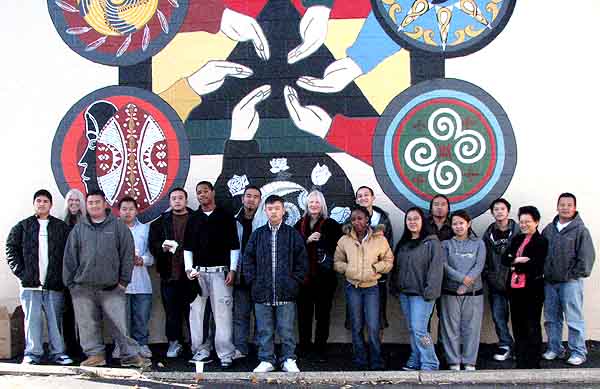
As you walk along the street, just before Arcade, you will come upon the newest mural that East Side St. Paul has to offer. The mural is located on the wall of the Size Matters Fashion Shop and was created and designed by students from the City Academy charter school. It represents the diversity of cultures on East Side St. Paul and the pride that we have for it. The idea for the mural began when the owner of the shop, Mee Thao, decided to renovate her building with the help of Historic Saint Paul and City Academy. The actual project began in the spring of 2006 and took several months to complete. A second component to this project: two paj ntaub made from ceramic tiles will be placed at the front of the building when completed. If you haven’t seen the mural, it consists of a large rectangle and six circles overlapping it on each corner and sides, with hands extending from each circle into the middle of the rectangle, which also has a triangle in the middle of it. But what do they stand for? The circle at the top represents people of Hispanic heritage, symbolized by the Aztec face. To the right of it is a Scandinavian design. Underneath that one, is a simple design from Hmong paj ntaub, representing Hmong people and other Asian cultures. The very bottom circle signifies people of European ancestry. Next, is the circle that stands for people of African-American ethnicity. It is an African person’s silhouette behind an African style shield. Last, but not least, is the circle that represents Native Americans, a woven basket with feathers projecting from the edge of the basket. Each hand is reaching into the center of the triangle within the rectangle, as if they are about to shake hands with each other, depicting the varieties of cultures on the East Side coming together. When I began this project I was enrolled in the Mural class at City Academy. My first task was to make the ceramic tiles that would be placed at the storefront. I was also enrolled in City Academy’s Construction class, which was asked to help in the making of the mural. We gave the wall a new paint job with a beige colored concealer. The basic design for the mural was drawn onto the wall by students in the Mural class and the painting was done by both classes. It was a long process, working under the blinding sun and the summer heat for three hours a day, but many students helped out, whether or not they were in either class. Of course, there was bound to be some kind of dispute, seeing as there were so many different and talented artists involved. One of the clashes developed over the original outer design of the bottom circle, which was unfortunately, my design. Most of the male artists had felt that the design was too feminine and colorful. In the end, we agreed on white roses on a black background. Another issue concerned whether or not to paint the hands different colors. Some of us wanted to and some of us did not. At the time they were still the beige color of the concealer. So, what did we do about it? Our teacher, Mem Lloyd, had us stand around a table, pull our sleeves up, and put our hands out into the middle. We saw that even though we were all a different race, our skin colors were actually quite close in color. The colors of the hands in the mural were chosen to stay as they were. This experience was very new to some people, thinking that they would never be artists or that they didn’t even have a single artistic bone in their body. We learned that no matter what skills you possess, or don’t possess, in painting or drawing or any kind of art, when it comes to making a difference in your neighborhood, every little bit of help counts. Church Directory Amazing Grace Assembly of God 463 Maria St. Paul, MN 55106 651-776-7210 1 block North of Metropolitan State University Sun 8:00 am – Free Community Breakfast 9:30 am, - Worship service Sun 10:45 am - Education for all ages Handicapped accessible ALL ARE WELCOME!
Mounds Park United
Methodist Worship times are subject to
change. Please call ahead to confirm.
National
Trust Preservation Conference - Two Reviews By Joyce Danner The award or recognition may be for a sport, their business or profession, an educational achievement, a hobby, or some student activity. Our profile will briefly review their accomplishments and background and their connection to the Bluff. We want a recent photo of the person being profiled. Concerning past Bluffers, we seek not only a current, or contemporary photo, but would also like a photo or snapshot of them when they were resident or working in the Bluff, if possible. These “Bluff Riders” help us recognize that many people have helped “Build the Bluff,” and others are doing so every day, thus becoming members of the “Positive Force Gang (PFG)” whose riders have ridden on (or will ride on) to make contributions in business, education, sports, the hobby world, or their professions. Some are very young, others much older, yet all come from the rich heritage of Dayton’s Bluff - the neighborhood that “Saint Paul looks up to.” Send your suggestions for future profiles to ed@daytonsbluff.org (please include contact information) or call Ed at 772-2075. Former Bluff Rider Gets Inducted
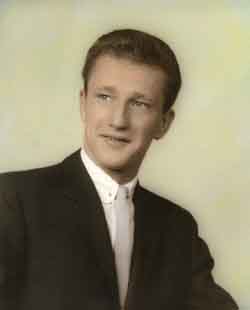
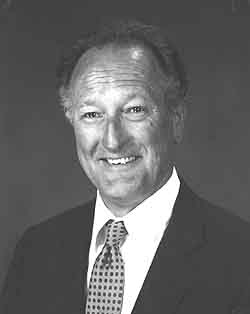
By Ed Lambert In October of this year, the Minnesota Broadcasters Association inducted 8 members into their Minnesota Broadcasters Hall of Fame. Among those inducted, along with Dan Shelby and other major broadcasters, was a “Bluff Rider,” former resident Wayne Eddy. He is the first Bluff Rider to be profiled in this series. Wayne lived in several locations in Dayton’s Bluff during the 50s and 60s, including in the back of the old Rocco’s grocery store at 4th and Forest. He also worked in the Bluff making “Pronto Pups” (a kind of Empanada. or rolled up Pizza, looking a bit like a hot dog shaped turnover) at a business located at the corner of 4th and Cypress. Wayne is also a member of the Minnesota Softball Hall of Fame, and the Elko Speedway Hall of Fame; and has received numerous professional and business awards in the Broadcasting Industry. He left Saint Paul in 1964 to pursue a career in radio and TV broadcasting. His first job was in Tomah, Wisconsin; then moved on to several TV and radio positions finally settling in Northfield Minnesota. For 39 years he was associated with KYMN-AM Radio 1080 in Northfield, about 50 miles south of the Bluff on State Highway 3. He eventually rose to become the station’s owner some years ago. Last year he sold the station and now focuses on public speaking and his work as a fundraiser for several Northfield area charities. Wayne was a “rider” for Northfield as well, having been a member of their famous “Jesse James Gang” riders for over 20 years. He’s now hosting a Radio show called the “Wayne Eddy Affair” on KYMN –AM 1080 from 9-11 weekdays. Bluffers relatively close to the Mississippi can often receive KYMN’s AM signal, and listen to the old Bluffer interviewing his guests and talking about Northfield and his many other interests; sometimes including stories about Dayton’s Bluff and his time here. It’s a call-in show, so check it out and call in. By Alvin Mitchell, Outreach Coordinator, Mounds Park United
Methodist Church
Hmong
American Partnership Gets Bao
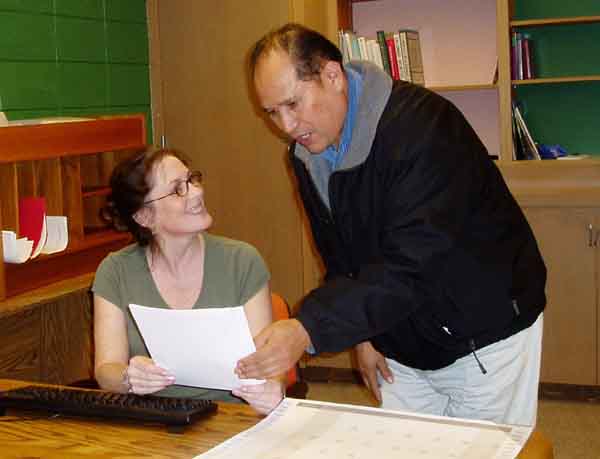
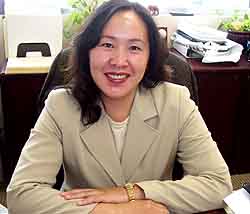
By Ed Lambert, Executive Director, Dayton’s Bluff Community
Council Business in the Bluff
The 10-person team of Dayton’s Bluff folks who went to the 2006 Neighborhood Works conference in Nashville, is close to finishing their Welcome Bag, including a Dayton’s Bluff Business Directory. The Welcome Bag is intended to be an item that the Community Council and Block Clubs, among others, will hand out to residents and businesses new to the Bluff. Charlie Golden-Black, the team member pictured with this article, has focused on completing the Business Directory by the end of December 2007. She has been visiting businesses in person to get their current information, and to ask for a $15 voluntary donation for the listing. All businesses will be listed whether they donate to help or not, as the team feels we need a Dayton’s Bluff Business Directory for the newcomers in the Welcome Bag. If you have not seen her, or you have a home-based business, please contact her at garden_house@comcast.net and she will send you an information form to fill out. You can also contact Karin DuPaul, another team member, at Karin@daytonsbluff.org to get the form and get listed. Karin can also be reached at 651-772-2075. The Post Office says we have 211 business addresses in the 11 Postal Carrier Routes (PCRs) of 55106, which lie within Dayton’s Bluff (55106 has 16 PCRs). Please get your info in now so people know you are there and want their business. Metropolitan State University announces new art exhibit Metropolitan State University Third Floor Gallery is pleased to present Focus on Fibers: Selections from the Textile Center. The exhibit opened Monday, Nov. 26. The show continues through Friday, Dec. 14. Gallery hours are Monday–Thursday, 11 a.m.–7 p.m. and Friday–Saturday, 11 a.m.– 4 p.m. The gallery is located in the Library and Learning Center, 645 East Seventh Street, Saint Paul. This exhibition investigates the breadth and depth of the local fiber field by featuring the work of 14 Textile Center members. From traditional weaving and beading techniques to abstract sculptures and duct tape dresses, this show spans the gamut in terms of form and content. Regarding the quality and diversity of the work in the show, Textile Center director, Margaret Miller, said, “We are extremely fortunate to live in a community of talented fiber artists whose work is unrivaled. As this show exemplifies, fiber art offers unlimited opportunities for exploration in technique and media, making it one of the most innovative and exciting art forms today.” For more information, contact Erica Rasmussen, gallery director, at 651-793-1631 or e-mail erica.rasmussen@metrostate.edu. As a national center for fiber art, the Textile Center’s mission is to honor textile traditions and promote excellence and innovation in fiber art. The Textile Center represents and supports fiber artists working in all forms of textile media including weaving, quilting, knitting, sewing, needlework, lace making, basketry and beading. A critical part of the Textile Center’s mission is to bring validation and visibility to this field of art. Textile arts arise from all cultures, and the Textile Center works to preserve traditional forms as well as to encourage experimentation and the development of new fiber art forms. Metropolitan State University, a member of the Minnesota State Colleges and Universities system, provides high-quality, affordable education programs for adults seeking baccalaureate and master’s degrees. It is the only state university in the Twin Cities metropolitan area. Past issues of the Dayton's Bluff District Forum |



 |
  |

 |
| Past issues of the Dayton's Bluff District Forum |